


Our Sustainability Story
At CPChem, sustainability is woven into our business, and it inspires continuous improvement and innovation across the company. As a global leader in the production of chemicals and plastics, we strongly support efforts to reduce plastic waste and lower greenhouse gas emissions.
Climate Intensity Aspirational Target
In 2022, CPChem announced an aspirational target for 2030 that aimed to reduce the company’s operated Scope 1 and Scope 2 carbon intensity by 15% compared to a 2020 baseline. The company is updating its aspirational target to remove the 2030 timeline. This adjustment reflects strategic assessments of changing policy and regulatory conditions and the significant economic realities that make large-scale carbon intensity reductions challenging.
CPChem’s approach is grounded in disciplined business practices that safeguard long-term resilience while recognizing that meaningful progress depends on supportive market signals and enabling policy and regulatory frameworks. Industry-wide headwinds, evolving technologies, and volatile market dynamics require flexibility to ensure CPChem’s targets remain aspirational and achievable.
This update reinforces CPChem’s commitment to advancing carbon intensity reduction initiatives that align with operational feasibility and strategic objectives, while acknowledging that sustained progress will require collaboration across industry, investment and regulatory ecosystems. CPChem remains confident in its sustainability strategy and will continue efforts to reduce carbon intensity, maintain sustainable growth and contribute to a lower-carbon future.
Circularity Aspirational Target
In 2020, CPChem introduced an aspirational target to produce 1 billion pounds of Marlex® Anew™ Circular Polyethylene annually by 2030, reflecting a focus on supporting the development of a circular economy for plastics. Evolving alongside shifting global market and regulatory conditions, CPChem’s sustainability strategy will continue to prioritize and support circularity without maintaining an aspirational target.
This adjustment follows a strategic evaluation of market dynamics, including uncertainty in demand growth, fragmented regulations, feedstock sourcing challenges and technology scale-up timelines; factors that underscore the need for flexibility and disciplined decision-making. CPChem’s approach remains rooted in feasibility and long-term resilience, recognizing that meaningful progress will require enabling policy to guide laws and regulations, clear market signals and collaboration across the entire value chain.
CPChem remains committed to innovation, advocacy and collaboration, driving progress to unlock a circular economy and keep plastics out of the environment.
Key Focus Areas
CPChem’s sustainability strategy has three focus areas that inspire and drive progress on our sustainability journey, while also elevating the people and communities where we operate.

Climate Change

Product Sustainability and Circularity

Social Responsibility
Assessing Material Topics
Materiality assessments help us identify key issues and set company priorities. Assessments are completed through benchmarking and dialogue with stakeholder groups. CPChem’s 2020 Key Issue Assessment provided valuable insight and helped to shape the company’s sustainability goals.
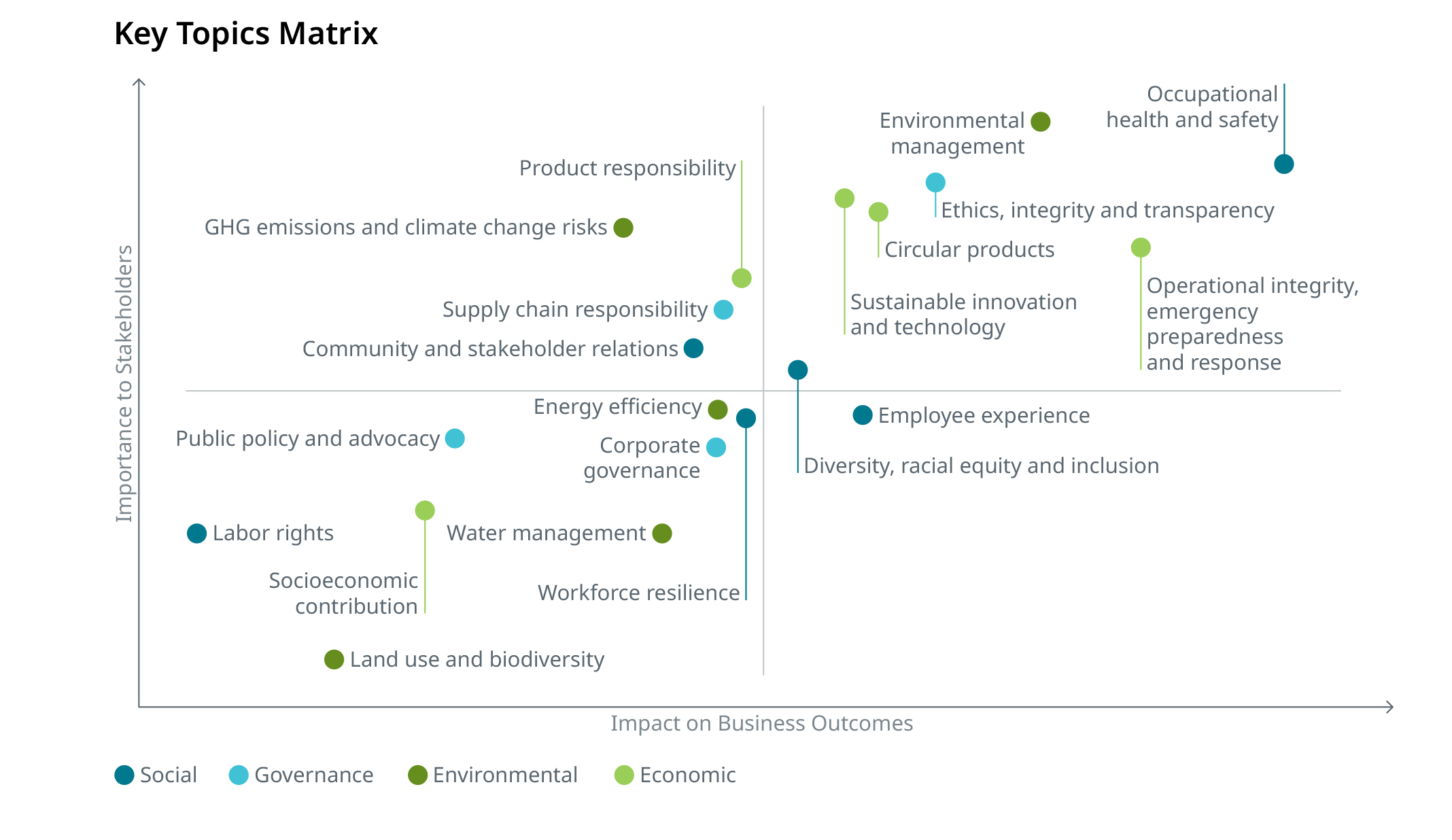
Examples of key issues:
- GHG emissions and climate change risk
- Product responsibility
- Circular products
- Occupational health and safety
- Diversity, equity, and inclusion
- Labor rights
- Employee experience
- Energy efficiency
- Energy efficiency
- Land use and biodiversity
Stakeholder Engagement and Governance
Stakeholder awareness and engagement helps us assess business priorities and is a component of CPChem’s corporate sustainability efforts. We collaborate with the following stakeholder groups to better understand their unique perspectives on relevant social, environmental and governance issues:
- Employees
- Communities
- Governments
- Suppliers and customers
- Non-governmental organizations (NGOs)
- Industry trade sector
Executive-led oversight teams are charged with directing the company’s targeted efforts related to Climate Change and Product Sustainability and Circularity. These bodies provide a multi-disciplinary approach to manage and align sustainability activities with CPChem’s operational, commercial and functional priorities.
See how we're turning our mission into action.

07/28/2025
THE WOODLANDS, Texas — Chevron Phillips Chemical today published its 2024 Sustainability Report. Titled Spot on, the organization’s 14th sustainability report reflects the purpose, people and pr ...

07/21/2025
Photo credit: Plastics EuropeCPChem VP of Sustainability Benny Mermans, the newly elected president of Plastics Europe, and Virginia Janssens, managing director of Plastics Europe CPChem’s Benny ...
07/18/2024
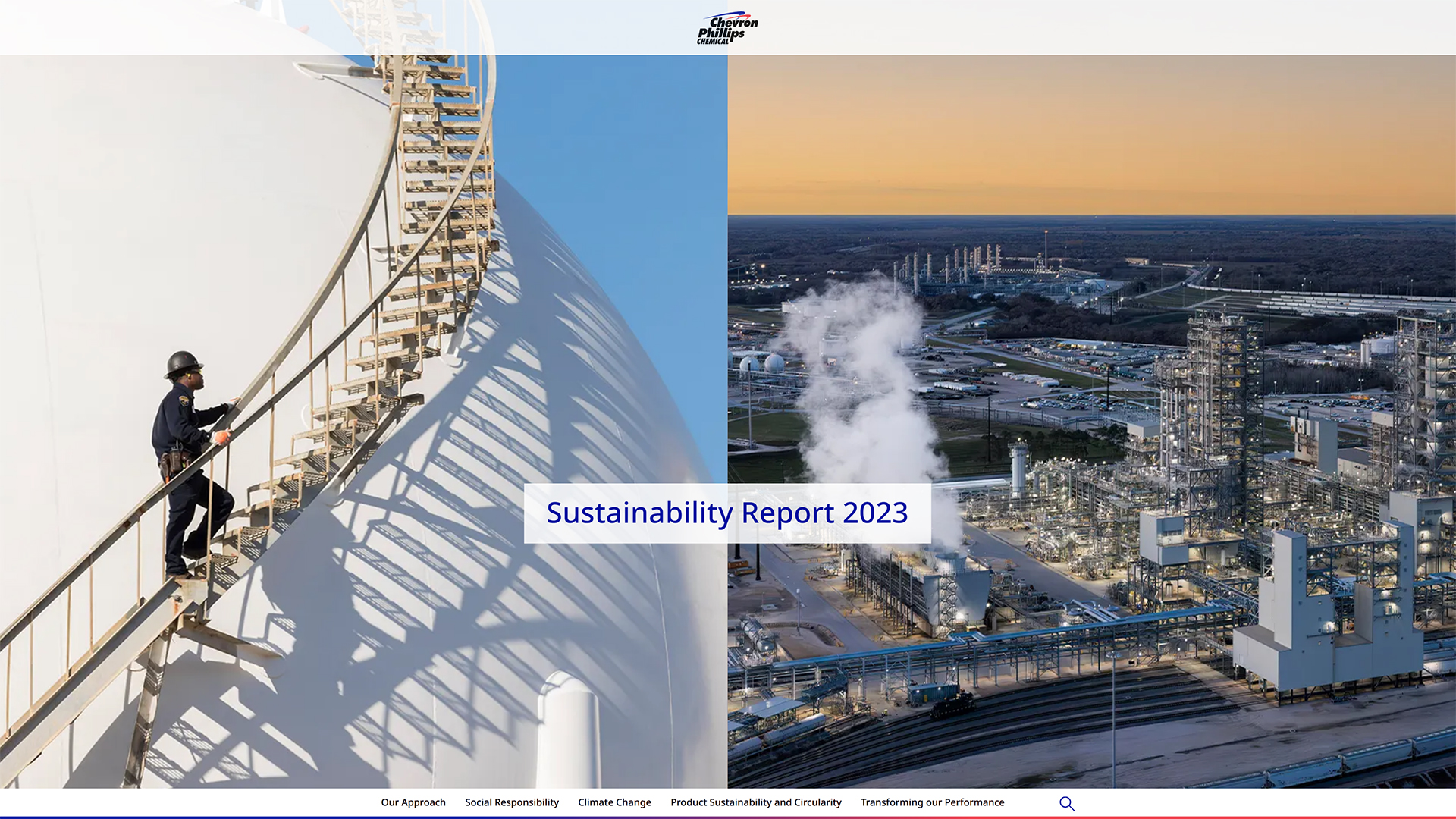
THE WOODLANDS, Texas — Chevron Phillips Chemical today published its 2023 Sustainability Report, a comprehensive document that showcases the company’s efforts and notable achievements in its journey t ...
