

In manufacturing, the greatest risk isn’t always equipment, it’s hesitation.

That’s something Plant Manager Carries Phillips has seen firsthand during her career in high-hazard operations.
“When employees pause because they are unsure whether they have authority to act, critical moments can be lost,” Phillips says. “That’s why we’ve worked hard to eliminate uncertainty at CPChem.”
We believe silence has no place in a safe workplace. That’s why we’ve reframed the industry’s traditional concept of “Stop Work Authority” into Stop Work Responsibility, a philosophy where every employee has not just the right but the duty to stop work if they see a potential hazard. “Authority can feel hierarchical,” Phillips explains. “Responsibility puts safety exactly where it belongs – with every one of us.”
This approach is a cornerstone of Our Journey to Zero, CPChem’s Environmental, Health, Safety & Security strategy. More than a program, it’s a cultural commitment: safety is not delegated. It is owned at every level of the organization.
Our Journey to Zero: A blueprint for safety culture
Several years ago, Phillips played a leading role in reshaping Our Journey to Zero, driven by a simple question she kept coming back to: How do we make sure every employee goes home safe, every single day? Our Journey to Zero is the strategy that now serves as a blueprint for CPChem’s global safety culture. The plan sets measurable goals to limit high-potential and high-consequence events, while reinforcing that safety is ultimately about people, not numbers.
“It starts with a commitment to each other and our community,” Phillips explains. “It consists of three pillars. We care for each other. We drive safe and reliable operations. And we protect our environment. These three statements say a lot about who we are as a company.”
Operational Excellence: Learning from every lesson
From Phillips’ perspective, Operational Excellence is about curiosity and accountability. “When something goes wrong, or almost goes wrong, we owe it to each other to understand why,” she says. “Every lesson is an opportunity to get better.” Rather than treating data as a compliance exercise, OE transforms information into insights that strengthen operations company-wide.
Operational excellence refers to the continuous effort to improve an organization’s processes, systems, and culture to deliver high-quality products or services efficiently and effectively. It’s about doing things better, faster, and with fewer resources while maintaining consistency and reliability.
OE is fundamental to CPChem’s mission and vision, because safe operations are the foundation of reliable and responsible growth.
Embedding safety through field presence and employee ownership
At CPChem, safety leadership is not confined to offices or dashboards; it happens where the work is being done. Phillips and other leaders spend time in the field to listen, observe and learn directly from employees and contractors.
“Field presence is essential. I may need to clear my schedule, but being in the field is often more important than sitting in a meeting,” Phillips says. “When I’m out in the field, I ask employees about any hazards they have observed or the steps they took to mitigate issues. I learn so much from employees who have just joined us and those who have been in the industry for decades. Every perspective is valuable.”
That same commitment to ownership extends to CPChem’s weekly field audits and cross-functional safety committees. These forums do more than identify hazards, they empower employees to propose solutions. 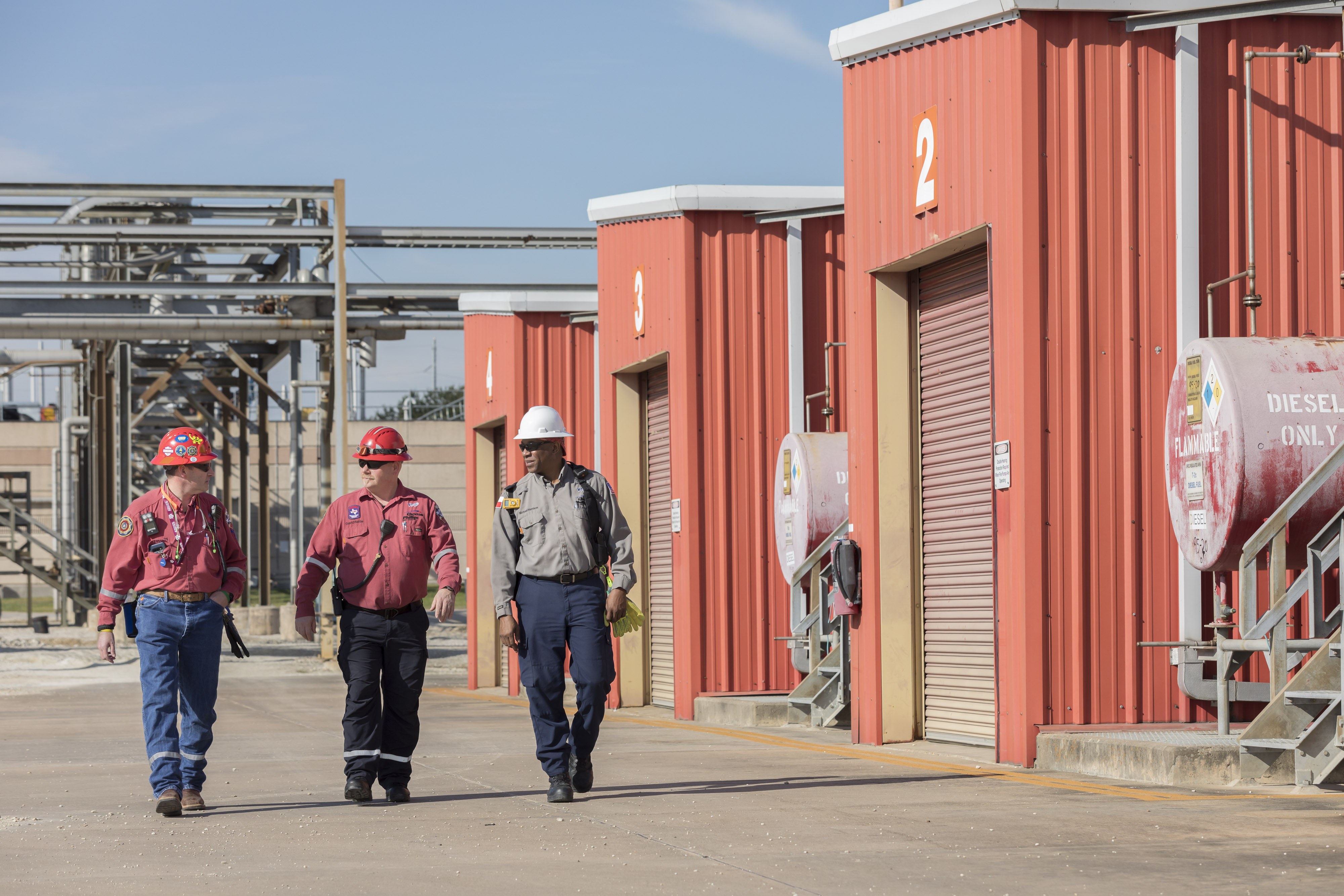 By giving personnel across all functions a voice, audits and committees transform safety from a checklist into a shared responsibility. As Phillips notes, field audits allow employees to “own their house” and be part of positive change.
Phillips describes some of her most valuable insights coming from informal conversations, standing beside equipment, listening to concerns or hearing a new hire ask a question that others may have stopped asking.
“Open communication is essential to let employees know we hear their concerns and are taking action to address them,” Phillips says. “We follow up to confirm the issue has been addressed.”
These practices have earned CPChem facilities recognition as OSHA Voluntary Protection Program Star sites, as well as multiple awards from organizations such as the Texas Chemical Council and the American Fuel and Petrochemical Manufacturers for maintaining injury and illness rates below national averages. But more importantly, they have helped cultivate a workforce where accountability is embraced at every level.
Phillips keeps the focus on people. “Awards are affirming, but the real measure of success is knowing our people trust the system enough to speak up—and that we act when they do.”
Safeguards that strengthen everyday safety
CPChem also examines potential high-consequence scenarios to identify the safeguards needed to reduce the risk of human error. These protections are not a substitute for operational discipline, they are reinforcements that support consistent success.
By coupling safeguards with a culture of ownership, CPChem builds systems that are both resilient and adaptable, ensuring that employees have the tools and support they need to act decisively in critical moments.
A culture of ownership: One team, one responsibility
Phillips is proud of CPChem’s safety record, but she emphasizes that results come from culture, not checklists.
For her, that commitment is personal. “When you walk through those gates, we are all one team,” she says. “We own the work together, and we look out for each other—because everyone has a family, a future, and a life beyond our fences.”
As CPChem continues Our Journey to Zero, that belief remains central: safety is human, shared and everyone’s responsibility - every day.