Frequently Asked Questions

collapse Can Synfluid® PAOs improve fuel economy, reducing both costs and carbon emissions, without sacrificing lubrication performance?
collapse What are some advantages of using PAO as a base oil in greases?
collapse I’ve heard that PAOs can reduce the operating temperature of equipment. How does this work?
collapse Consistency is very important for my products, but lately I’ve noticed some variability in base oils. I need a product that meets my lubricant needs every time, without any guessing. What can you tell me about Synfluid® PAOs?
collapse As an Equipment Maintenance Manager, one of my chief concerns is to make sure we are putting the most appropriate fluids in our equipment. Can you educate me on the advantages of using PAO-based hydraulic fluids?
collapse In my company’s effort to reduce costs, we are looking to consolidate to one grease rather than multiple greases. Any suggestions?
collapse I’ve heard about new PAOs based on other feedstocks that reportedly have improved properties. What’s the story from Chevron Phillips Chemical?
collapse Are biobased hydraulic fluids of lesser quality than normal hydraulic fluids?
collapse Lately there's been a fair amount of interest in "extended" oil drain interval products. Which PAO is best for crankcase applications?
collapse Yikes, energy costs are through the roof! It's costing me more to drive to work and run equipment on the job. How can we save on energy costs?
collapse Has the quality of Group III base oils achieved equality with PAOs?
collapse Can PAOs improve the safety margin in metalworking applications?
collapse I can't believe how tight driveline specifications are getting! How can your PAOs help me meet these challenges?
collapse Ouch! I just touched the gear box and burned my hand! Can Synfluid® Polyalphaolefins help this problem?
collapse Why Bio-Based Hydraulic Fluid?
collapse I am evaluating various compressor oils for a rotary screw lubricant. What benefits can be gained by using Synfluid® polyalphaolefins (PAOs) over mineral oil-based compressor oils?
collapse Does a higher viscosity index (VI) always reflect a better quality base oil?
collapse I recognize that I have choices for high-quality lubricant basestocks. Why would I choose PAOs?
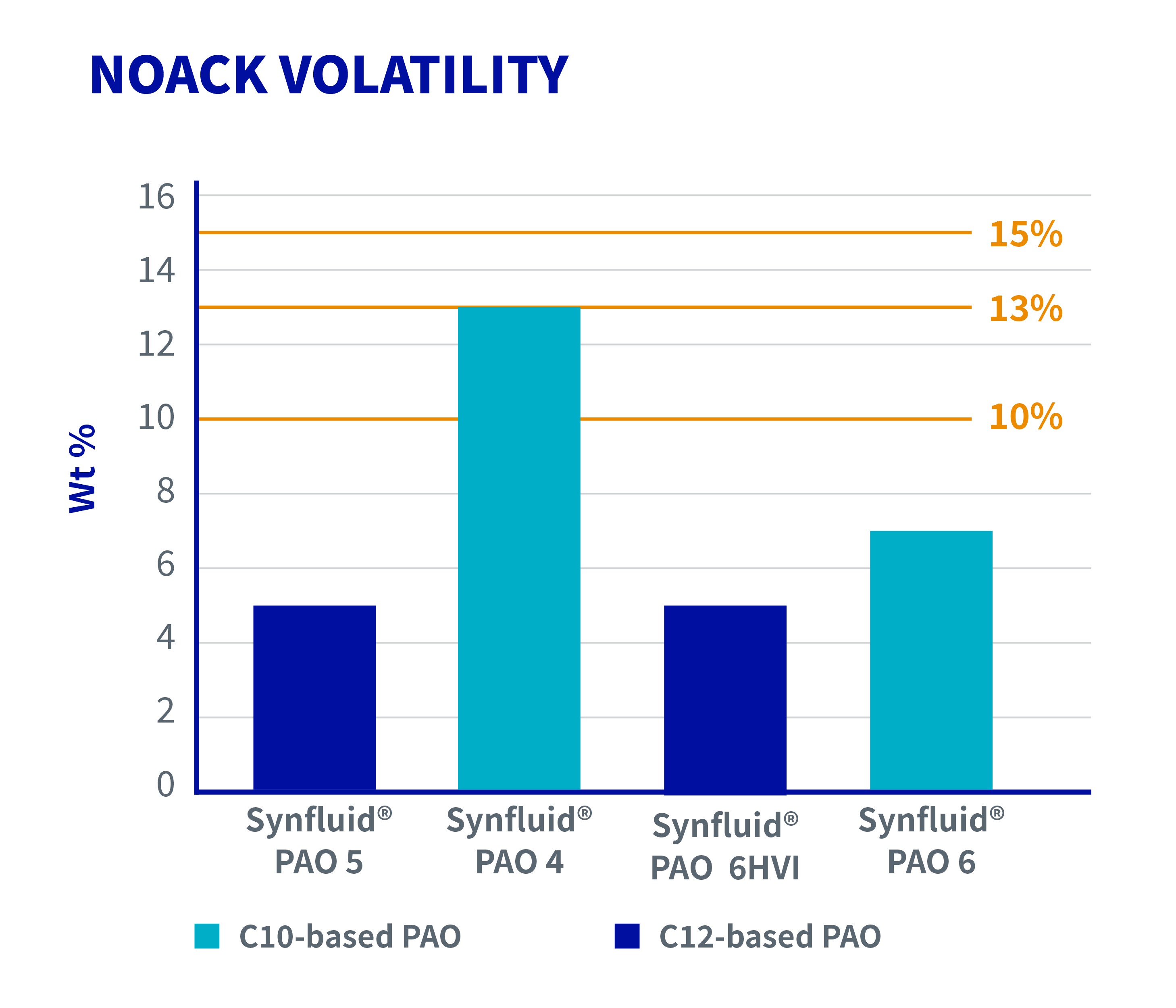
collapse Volatility is crucial for my application. PAOs have excellent volatility, but I'm looking for more. Can PAOs deliver?
collapse Environmentally safe hydraulic fluids are becoming highly desirable in the industry. What are the advantages of using PAOs in these formulations?
collapse Today’s lubricants demand better oxidative stability. What advantages do Synfluid® PAOs have?
collapse Pressures in the lubricants industry demand higher oxidative stability. What is the key to optimizing fluid performance when using Synfluid® PAOs?
collapse High-performance base oils are required to pass many European engine tests. I know PAOs will perform, but can they be economical?
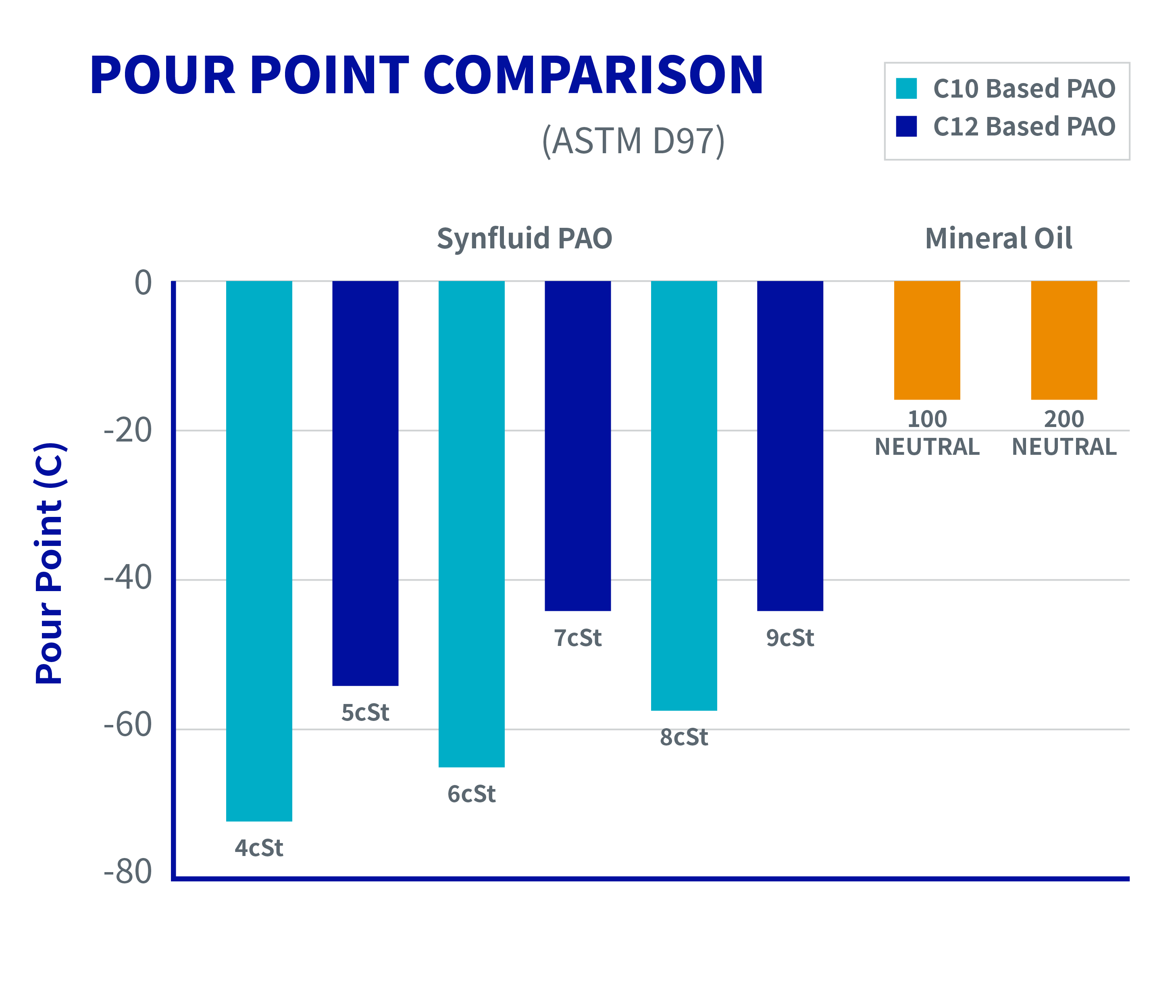
collapse I add Pour Point Depressants (PPD) to my Group III mineral oils and see an improvement in pour points. Why don’t polyalphaolefins (PAOs) respond to PPDs?
collapse I need a base fluid that has advantages in extreme pressure services. Can Synfluid® PAOs provide benefits in these severe applications?
collapse I have read about higher oxidative stability in Synfluid® PAOs. Can this benefit improve a finished formulation?
collapse Chevron Phillips Chemical is unique among its competitors in that it offers both C10- and C12-based PAOs. Why would I choose one over the other?
collapse Energy efficiency is not a new concept in the industry. How do Synfluid® PAOs help when reformulating is necessary?
collapse The fluids I design are subjected to various shear and temperature conditions. Can PAOs help me balance the protection and energy conservation requirements in my equipment?
collapse As an environmentally conscientious formulator, I am finding it quite overwhelming to navigate the maze of “green-focused” government mandates.  I want to ensure my products are safe for the environment, while still providing the performance that my customers demand. Can you help?